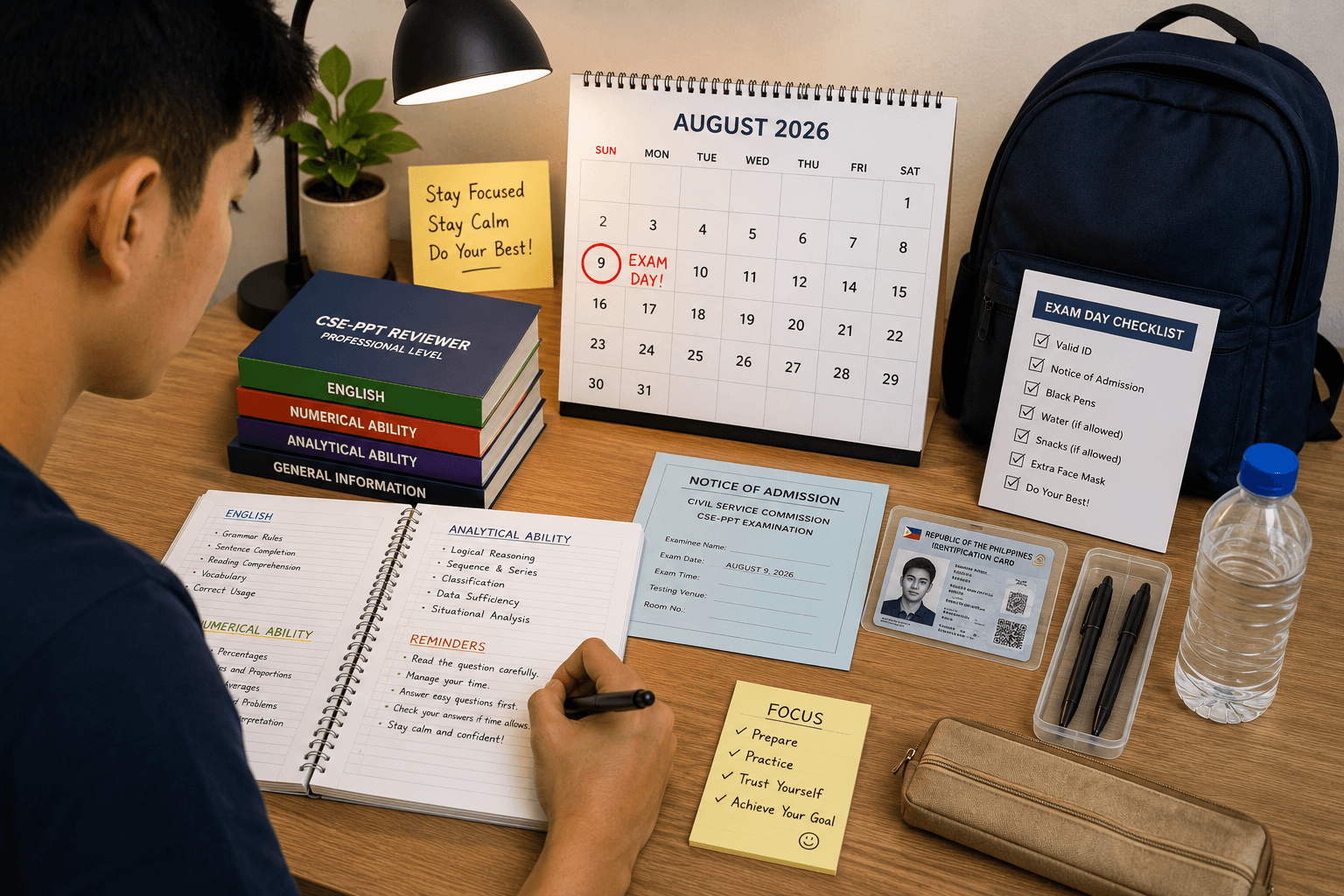
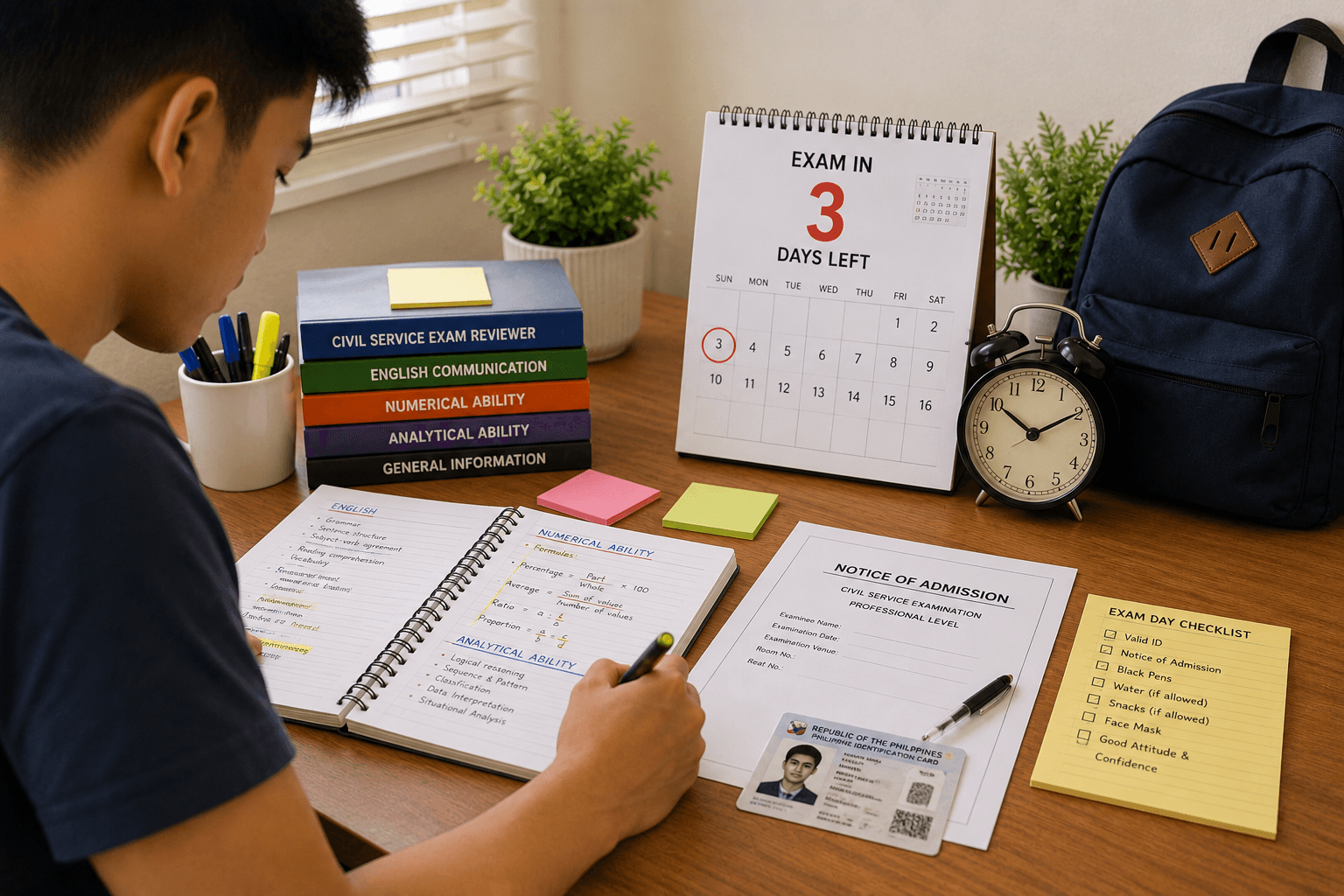
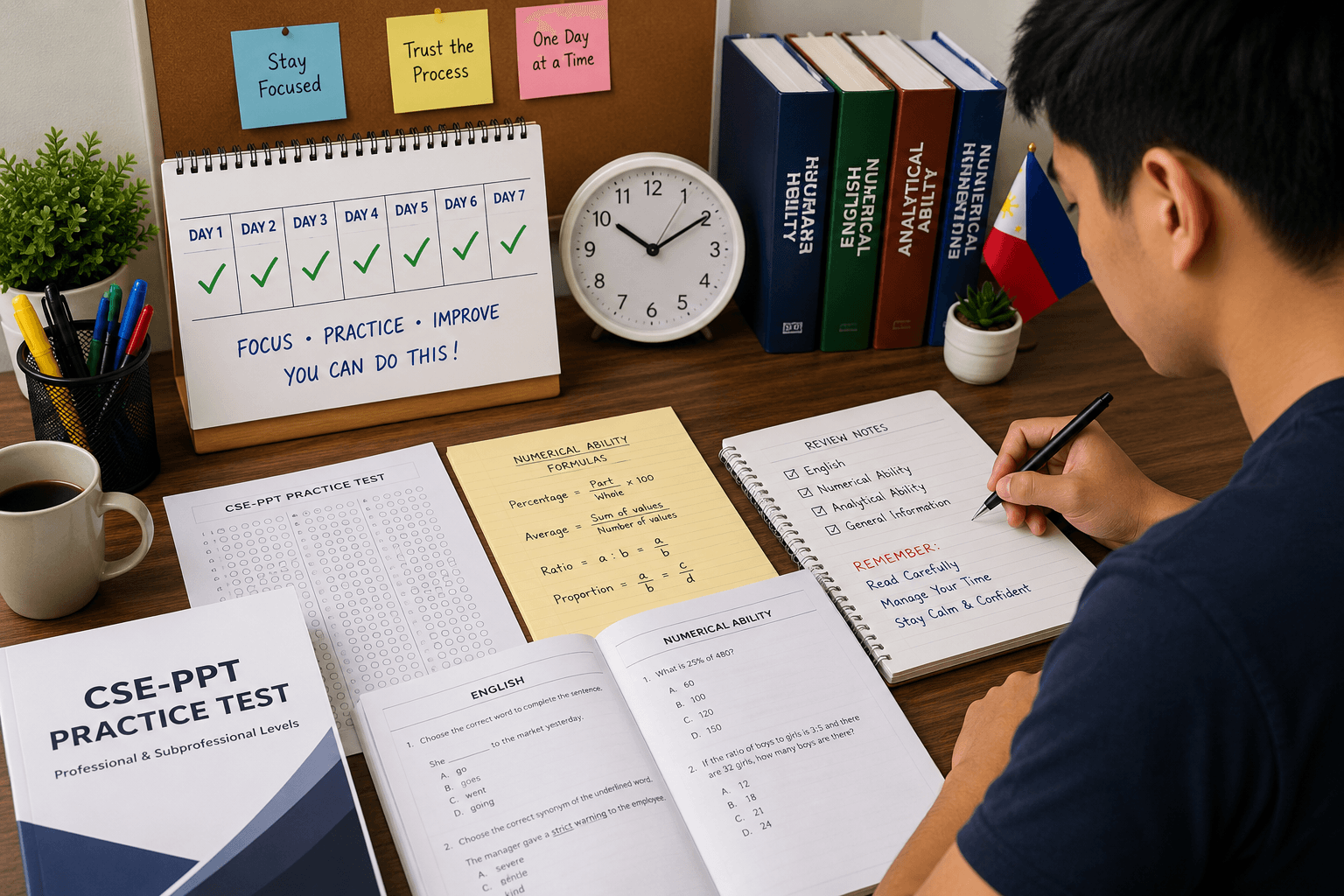
10 Common Civil Service Exam Mistakes to Avoid
Avoid these common Civil Service Exam mistakes that can cost valuable points. Learn practical tips to improve your performance on exam day.
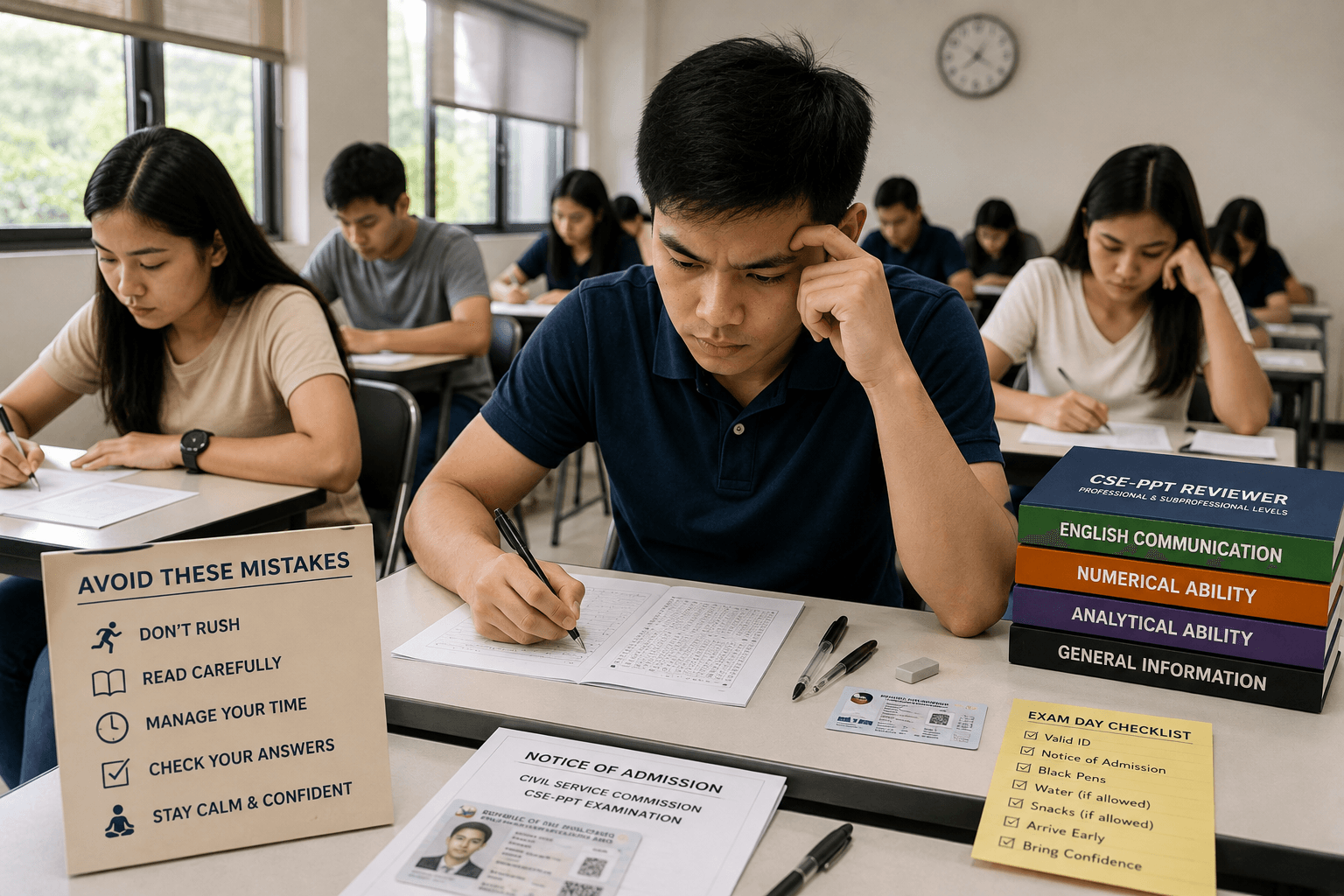
Avoid These Mistakes on Your Civil Service Exam
Preparing for the Civil Service Exam takes time and dedication, but even well-prepared examinees can lose valuable points because of simple mistakes. Many errors happen not because of a lack of knowledge but because of poor time management, rushing through questions, or overlooking important instructions.
Whether you're taking the Professional or Subprofessional CSE-PPT, knowing what mistakes to avoid can help you perform with greater confidence on exam day.
Keep in mind that examination schedules, requirements, and testing policies may change. Always verify the latest announcements with the Civil Service Commission before your examination.
Why Small Mistakes Matter
The Civil Service Exam measures not only what you know but also how well you apply your knowledge under time pressure.
Avoiding common mistakes can help you:
- Improve your overall score.
- Answer more questions correctly.
- Manage your time effectively.
- Stay calm throughout the examination.
- Reduce unnecessary stress.
Sometimes, avoiding one careless mistake can make more difference than answering one additional difficult question.
1. Cramming the Night Before
One of the biggest mistakes is trying to study everything the night before the exam.
Instead:
- Review summary notes.
- Refresh important formulas and grammar rules.
- Sleep early.
- Let your mind rest.
A well-rested brain remembers information better than an exhausted one.
2. Not Reading the Instructions Carefully
Many examinees rush to answer immediately without reading the instructions.
Before answering:
- Read each instruction completely.
- Understand what the question is asking.
- Double-check if multiple answers are required.
- Follow the directions exactly.
Taking a few extra seconds can prevent unnecessary mistakes.
3. Spending Too Much Time on One Question
Every exam includes questions that are more difficult than others.
If you're stuck:
- Make your best choice if appropriate.
- Mark the question mentally if your testing format allows revisiting.
- Continue with easier questions.
- Return later if time permits.
Don't let one difficult question consume valuable minutes.
Remember: Every question carries an opportunity to earn points. Don't sacrifice several easy questions because of one difficult item.
4. Ignoring Time Management
Many examinees know the material but fail to finish the exam.
Practice before exam day by:
- Taking timed mock exams.
- Monitoring your pace.
- Avoiding long pauses on difficult questions.
- Keeping enough time to review your answers.
Good time management is a skill that improves with practice.
5. Misreading the Question
Reading too quickly often leads to choosing the wrong answer.
Watch for words like:
- NOT
- EXCEPT
- MOST
- LEAST
- BEST
These keywords can completely change the meaning of a question.
6. Skipping Practice Tests
Some examinees spend all their time reading reviewers but never test what they've learned.
A full-length CSE-PPT practice test helps you:
- Measure your progress.
- Improve speed.
- Identify weak subjects.
- Build confidence before exam day.
Practice doesn't just improve knowledge—it improves performance.
7. Bringing Incomplete Requirements
Imagine arriving at the testing venue only to discover that you forgot an important document.
Prepare everything the night before, including:
- Valid ID
- Notice of Admission or other required documents, if applicable
- Black pens
- Other permitted materials based on official instructions
Being organized helps you start the day with less stress.
8. Letting Anxiety Take Over
Feeling nervous is completely normal.
To stay calm:
- Take slow, deep breaths.
- Focus on one question at a time.
- Avoid comparing yourself with other examinees.
- Trust the preparation you've already completed.
Confidence comes from consistent preparation—not perfection.
9. Changing Correct Answers Without a Good Reason
Many examinees second-guess themselves.
Unless you clearly recognize a mistake after reviewing the question, avoid changing answers based only on doubt.
Trust your reasoning, especially when you've prepared consistently.
10. Forgetting to Review Your Answers
If you finish early, don't submit immediately.
Use your remaining time to:
- Check unanswered questions.
- Review difficult items.
- Correct obvious mistakes.
- Make sure every answer is recorded properly.
A careful review can help you catch simple errors before time runs out.
Don't rush to finish first. Focus on finishing accurately.
Common Habits of Successful Examinees
Candidates who perform well often share these habits:
- They practice regularly instead of cramming.
- They take mock exams under timed conditions.
- They review their mistakes instead of memorizing answers.
- They prepare their exam requirements in advance.
- They arrive early at the testing venue.
- They remain calm even when encountering difficult questions.
These habits can make a meaningful difference on exam day.
Key Takeaway
Success in the Civil Service Exam isn't only about studying hard—it's also about avoiding the mistakes that cost valuable points. By managing your time wisely, reading questions carefully, staying organized, and keeping a calm mindset, you'll give yourself a better opportunity to perform at your best.
Continue practicing with RevView to strengthen your knowledge, sharpen your test-taking skills, and build the confidence you need for both the Professional and Subprofessional Civil Service Exam.